Checked on 15 September 2026
Where Do Families Stay?
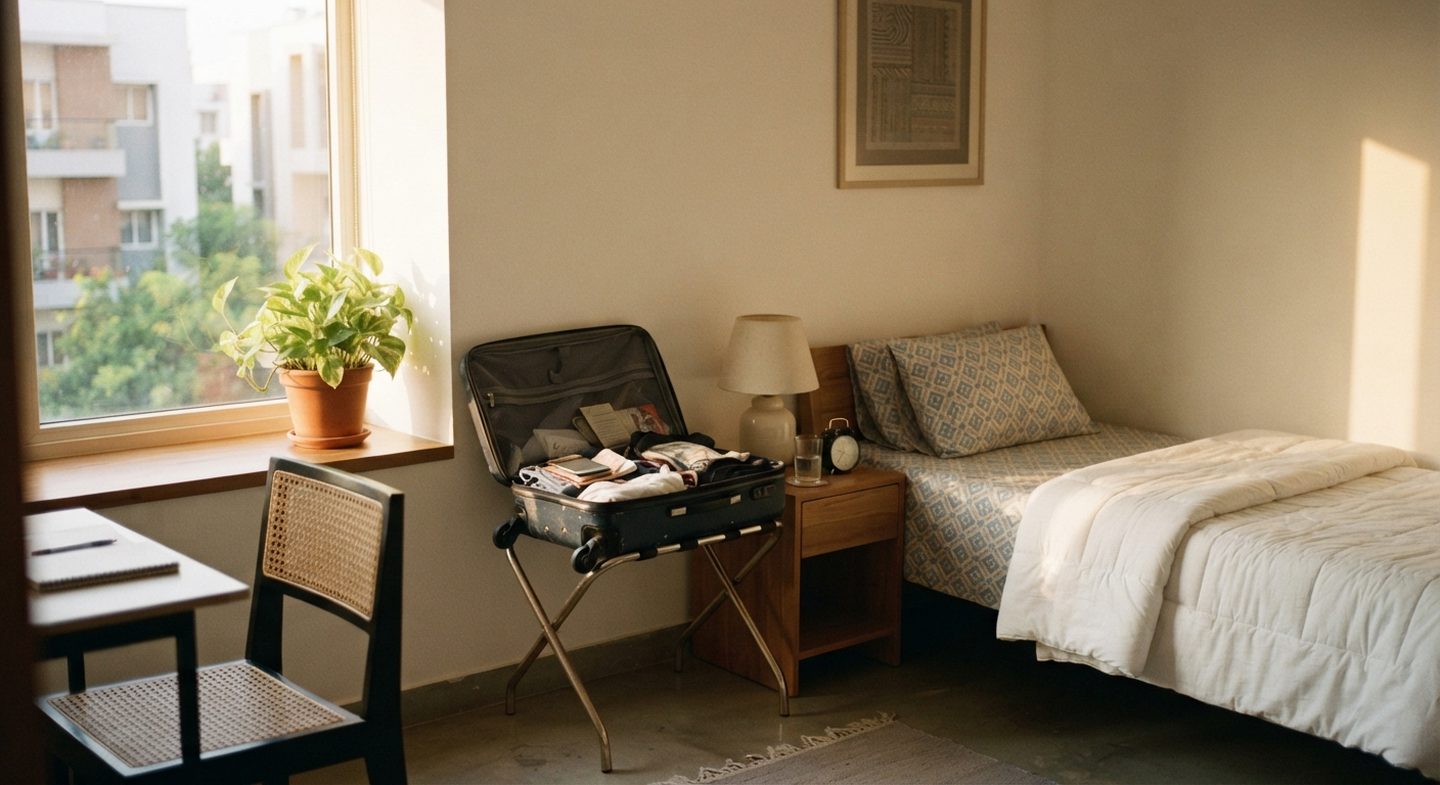
Families usually stay in one of these places:
- a guest house run by the hospital, or close to it
- a serviced apartment with a kitchen
- a hotel near the hospital
Before you book, check these things:
- How far is it from the hospital, and how will you get there?
- Is there a lift? This matters after surgery.
- Is there a kitchen, or food you can eat nearby?
- Can you extend the booking if your stay gets longer?
Some treatments, such as radiotherapy, mean visits to the hospital every day for several weeks. Choose somewhere close.
Hotels, guest houses and other places to stay must report foreign guests to the immigration authorities. They will ask to see your passport and visa.
Source: Bureau of Immigration, Government of India. Checked on 15 September 2026.
Can a Family Member Stay with the Patient in Hospital?
Each hospital has its own rules. Ask the hospital these questions, and ask for the answers in writing:
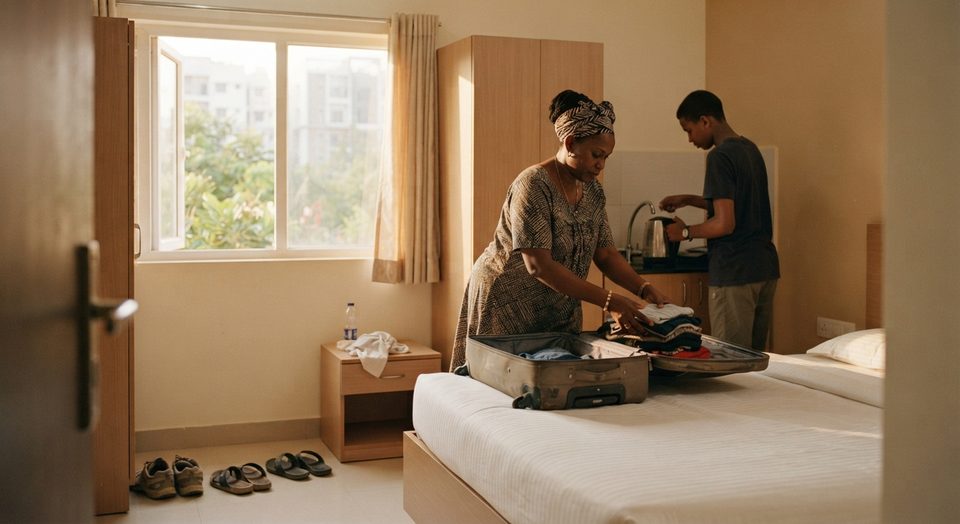
- Can one family member stay in the patient's room at night?
- Do their meals cost extra?
- How many visitors can come, and at what times?
- Can children visit the ward?
A family member who comes to care for the patient can apply for an e-Medical Attendant visa. Up to 2 e-Medical Attendant visas can be granted for one e-Medical visa. For children or other relatives, check the official website. Source: Government of India e-Visa website, checked on 15 September 2026. Read Visa and travel.
You Do Not Have to Travel Alone
Language help, attendant visas, and the coordinator who stays with your family.
Read what the video says
The thing families worry about, and rarely ask, is whether anyone will understand them.
So ask us which languages each hospital can support.
We will find out, and tell you before you choose.
And you do not have to travel alone.
Up to two family members can apply to travel with you.
They apply on the same official visa website.
Ask us whether a family member can stay with you in hospital.
We will check with the hospital and tell you.
You should not have to guess at any of this.
Food and Prayer
- Ask the hospital what meals it serves, and whether it can give you halal, vegetarian or other meals you need.
- Ask what food shops and restaurants are near your place to stay.
- Some families choose an apartment with a kitchen, so they can cook their own food during recovery.
- Ask whether the hospital has a prayer room.
- After treatment, your doctor may give you advice about food. Follow that advice first.
Language Help
Our coordinators speak English, Hindi. Some hospitals have interpreters for international patients. Ask the hospital before you choose it, or ask us to find out for you.
Phone and Internet
- Before you travel, save the phone numbers of the hospital's international patient desk and your coordinator.
- Mobile shops in India have their own rules for visitors who want a local SIM card. Carry your passport and visa, and ask the shop what it needs.
- If your bank sends payment codes to your home phone number, keep that SIM card working.
Money and Paying the Hospital
You pay the hospital directly. We never take cash, and we never ask you to pay into a personal bank account.
- Before you travel, ask the hospital in writing how you can pay it, for example by card or bank transfer. Ask whether it needs a deposit.
- Pay only into the hospital's own account. If someone sends you different bank details, call the hospital on the number from its official website.
- Ask for a receipt for every payment.
- Tell your bank before you travel, so it does not block your card.
Carrying Cash into India
Under India's customs baggage rules, you must declare foreign currency when you arrive if you carry more than US$5,000 in notes, or more than US$10,000 in foreign money in total. Check the current rule before you travel.
Source: baggage rules of the Central Board of Indirect Taxes and Customs (CBIC). We have not confirmed these figures on the official CBIC website, so please check the current rule. Checked on 15 September 2026.

What to Pack
- Your passport, a printed copy of your visa and the hospital's letter
- Your medical reports and scan images, including CDs if you have them
- A list of your medicines, with the generic name and dose of each, and enough medicine for your whole trip
- A yellow fever certificate, if you travel from Kenya
- Your bank cards and the hospital's written payment details
- Loose, comfortable clothes for after treatment
- Phone numbers for the hospital, your coordinator and your country's embassy or high commission in India
What If Our Stay Gets Longer?
Sometimes treatment or recovery takes longer than planned. If this happens:
- Tell the hospital and your coordinator as early as you can.
- Check the end date of your visa. The e-Medical visa cannot be extended. Check the current rule with the Foreigners Regional Registration Office (FRRO).
- Ask the hospital for a new written estimate for the extra days.
- Ask your place to stay whether you can extend your booking.
When you are ready to leave, read After you go home.